

Remembrances of Leavitt Crowell (Part 2)
Updated: Jul 28, 2025
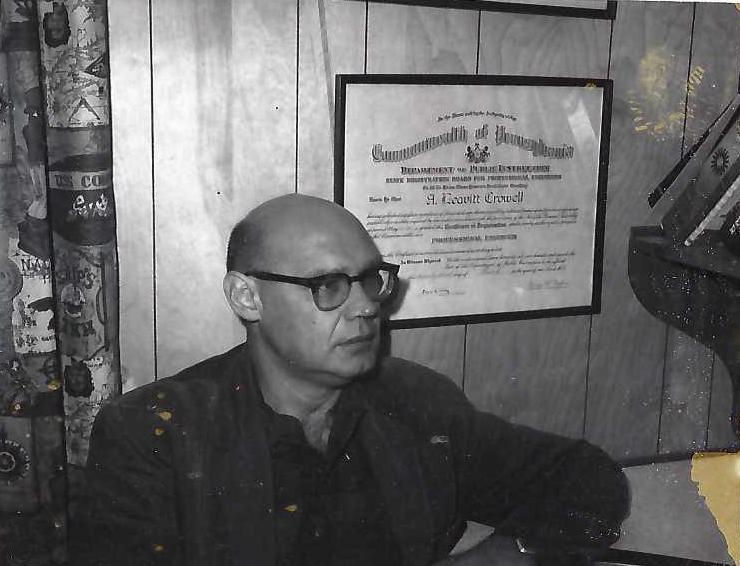
I think little boys are the same fearless, playful rascals no matter in what era they lived.

Yarmouth Register reports on Leavitt at age 9 falling asleep in the dunes of Sandy Neck while out with his father. These are the actions of a typical nine-year-old boy even in October of 1931.
They had been clamming and he wandered off on his own, probably wanted to explore as little kids do. He did not realize how far he was wandering. Of course, he did not hear the adults crying out his name then trying to find him. His father grew more and more anxious and finally went back to town to raise the alarm. It was a Sunday night and getting dark.
Meanwhile, Leavitt realized he was lost so he climbed the highest dune to look out. He saw the lights of Sandwich Village six miles away. After a while he became tired of trudging through the dunes toward home and curled up and fell asleep in the still warm sand.
His father, Lincoln, had gathered 50 people to make an organized search for Leavitt. Finally, they found him fast sleep in the safety of the dunes, like he had not a care in the world.
I bet his father aged some that night!
Leavitt told Carolyn Crowell how he and her brother, Howard, would roam around the remains of structures left over on the Crow farm property (bought in 1918), from even before the Poor House days on Charles Street. They thought nothing of dismantling an old structure to create a ‘hut’ for themselves.
Let’s pick up here with Leavitt’s words as he wrote them to his cousin, Carolyn. Writing in March of 1999 Leavitt continues:
“Outside of the barn which predates the Alms House, there were probably no buildings still standing from the Alms House.
"I don’t know if the woodshed that was torn down to make room for the garage dated to the Alms House but as I remember it was an old structure when it was torn down in the '20s and possibly predated Belcher ownership [people who owned the property before the Crowell’s]. Giving the time that it would have taken for the building to have gotten in that condition it could well have dated back to the Alms house.
"The tractor shed by cold storage is made from freight car doors salvaged from the Keith Car Works. [In operation from 1846-1928 in Sagamore, beginning when the area was West Sandwich.]

“The only remnant of the Alms House is the stonework in the basement. The
basement incidentally contained the Town Jail. There were several old cell bars
around the farm when I was growing up. There was an old cistern in under the
south part of the house that was filled with sand which my father dug out when
he finished excavating the basement. There was quite a bit of debris from the
fire and there was an old cellar door as well as some of the cell bars that he
used for concrete reinforcing when he poured the cement floor. When your
father [David Crowell] worked the land along the lane they uncovered an old
well that had been filled in and there were some cut stones probably from a
foundation. I always thought there was another house along the lane directly
opposite the spring as there was a lot of pottery shards that eroded from the
soil. The foundation would have been covered over when the lot was regraded.

“There were two horses on the farm when I was small. Dick, who was white and
Bruno who was black. I can remember riding on Bruno’s back from the hay field
to the barn during haying. You must remember the fun of treading the hay in the
hay wagon and again in the barn.
"I also remember riding on Dick up into town to Sullivan’s blacksmith shop to
have new shoes. Also going down to the salt marsh for salt hay. When mowing
the marsh, the horses wore wooden shoes to give better bearing in the marsh.
The salt hay was used for cattle bedding."

Kaethe Maguire is a member of the Friends of the Sandwich Town Archives, a dedicated, all-volunteer, 501(c)(3) nonprofit committed to supporting and promoting the archives’ collections and the rich, diverse history of the town of Sandwich.

Comments